Denver, CO & the surrounding area
Furnace Repair or Replace in Denver
Furnace Installation Denver helps Denver-area homeowners work out whether a furnace is worth fixing before anyone quotes a replacement. If you've got a repair estimate in hand and you're not sure it's money well spent, call (303) 226-1486 for a free second look. We'd rather tell you to keep the furnace than sell you one you don't need.
- Free replacement estimate
- Insured local pro
- No obligation
Free Furnace Estimate
A no-cost in-home estimate, with no obligation to buy
Insured Local Heating Professional
We connect you with one independent Denver-area business
Clear Sizing & Price Answers
Understand the options before you decide on a replacement
The quickest screen in the trade: multiply the repair estimate by the furnace's age in years. Over $5,000 and replacement is usually the better spend.
| Repair quote | Furnace age | Result | Lean |
|---|---|---|---|
| $400 | 6 years | $2,400 | Repair |
| $400 | 20 years | $8,000 | Replace |
| $900 | 12 years | $10,800 | Replace |
| $250 | 14 years | $3,500 | Repair |
| $1,200 | 9 years | $10,800 | Replace |
It's a good rule because it captures the thing people get wrong, which is that a modest repair on an old machine is rarely the last one. But it's arithmetic, not judgment, and three things override it.
A cracked heat exchanger is a replacement conversation at nearly any age, because that's a combustion-safety issue rather than a comfort one. A furnace still under manufacturer warranty changes the math completely — if parts are covered you're only paying labor, and the rule assumes you're paying for both. And a furnace past 20 that's heating evenly with no repair history doesn't have to be replaced on schedule just for being old. Age alone isn't a fault.
Repairs usually worth paying for
These are cheap, common, and don't signal a failing system:
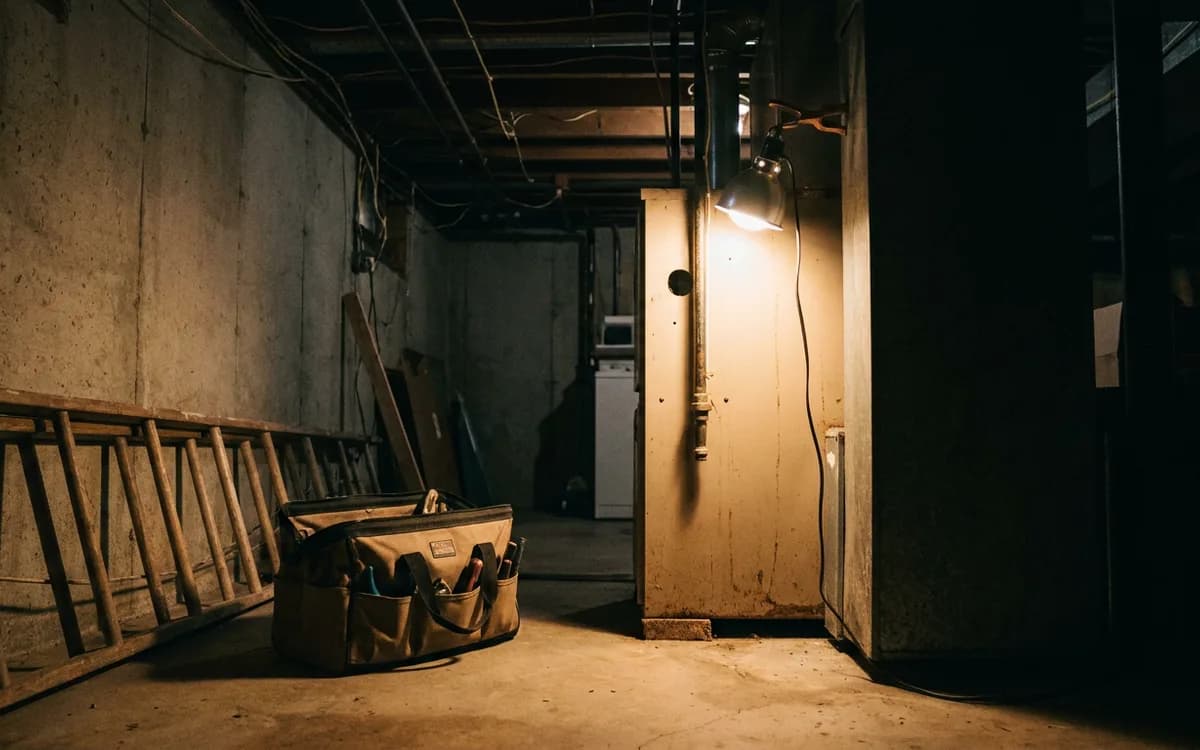
- Flame sensor — a dirty or worn sensor makes the furnace light and then shut down within seconds. Cleaning or replacement is inexpensive and completely routine.
- Hot surface ignitor — a wear item. They fail on a predictable schedule and replacing one says nothing about the furnace's remaining life.
- Thermostat — sometimes the "broken furnace" is a dead thermostat. Worth ruling out first.
- Capacitor — small part, low cost, frequently the reason a blower won't start.
- Limit switch or pressure switch — moderate cost, and a normal failure on a mid-life unit.
If your furnace is under 15 and one of these is the finding, repair it and move on. The rule of thumb doesn't need to be consulted for a $200 part.
Repairs that usually mean it's time
The expensive parts are where the decision actually lives:
- Blower motor — often $600 to $1,200 installed. On a furnace past 15, you're putting a significant fraction of a new unit's cost into an old one.
- Control board — similar money, similar logic.
- Heat exchanger — frequently within a few hundred dollars of a complete new furnace. On anything but a young unit under warranty, this is the end of the conversation.
- Multiple failures in one visit — two major parts at once means the rest of the machine is the same age as the two that just failed.
The findings that end the conversation
Some things aren't a cost calculation at all.
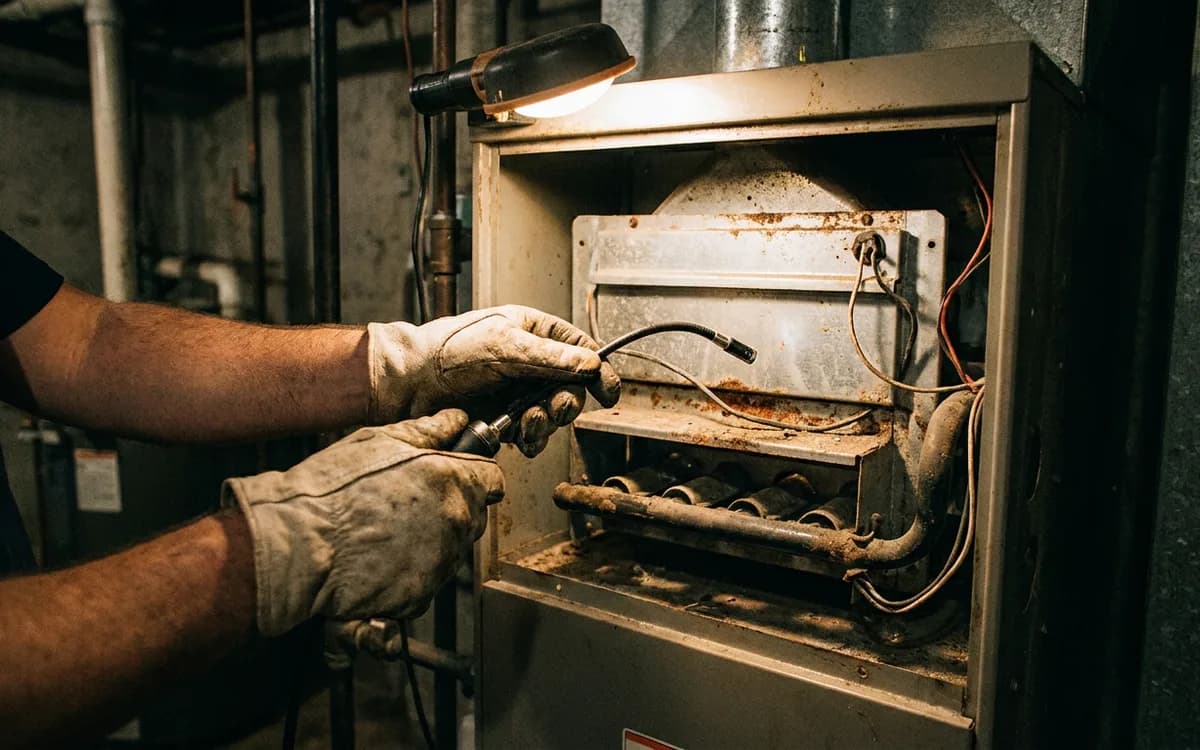
A cracked heat exchanger. The heat exchanger is the metal wall separating combustion gases from the air circulating through your house. A crack lets those gases into the airstream. This is a stop-using-it finding, not a schedule-it-for-spring finding.
Soot around the cabinet, or a yellow burner flame. A healthy gas flame is steady and blue. Yellow, orange, or flickering means incomplete combustion and it needs eyes on it that day.
A carbon monoxide detector that keeps going off. Leave, then call. Never treat a repeat CO alarm as a faulty detector until a professional has confirmed it is one.
A strong chemical or formaldehyde-like smell when the heat runs. Not the dusty smell of the first burn of the season — a sharp one that persists.
One honest caveat: the cracked-heat-exchanger diagnosis is also the most common upsell in this trade. The finding is frequently real and genuinely dangerous. It's also the fastest route from a service call to a five-figure sale. Ask the technician to show you — a camera photo or a combustion analyzer reading — and if they can't or won't, get a second opinion before you buy anything. A contractor confident in the finding will happily document it.
What a Denver winter adds to the math
Timing matters here more than in a mild climate.
A furnace that fails in January fails when every heating company in the metro is booked, and an emergency replacement is a worse purchase than a planned one — less time to compare quotes, less negotiating room, more pressure. If your furnace is in the judgment zone and it's autumn, decide in autumn.
Denver's altitude is the second factor. Gas furnaces lose roughly 4% of capacity per 1,000 feet, and the city sits above 5,200 feet. A furnace that's aging and derated by elevation runs longer to hit the same temperature, which accelerates wear on exactly the parts that are already tired.
Denver's older housing stock is the third. The city's median home was built in 1975 — that's ACS 2024 five-year data — and much of that stock has ductwork sized for the furnaces of that era. When you do replace, the duct question is part of the job rather than a separate surprise.
A straight way to decide
Work through it in order:
- Is it a safety finding? Cracked heat exchanger, CO alarm, soot, yellow flame — replace, and stop using the furnace until someone has looked at it.
- Run the $5,000 rule. Repair cost times age. Over $5,000 leans replace.
- Count recent repairs. Two service calls in one winter means the third is coming.
- Check the warranty. Covered parts change the answer.
- Check comfort. Uneven rooms and constant cycling with clean filters means the furnace is already failing at its actual job.
If steps 1 through 5 all point to repair, repair it. That is a real outcome and it happens often.
If they point to replacement, furnace replacement in Denver covers what the job involves, and the cost guide has the size and efficiency tables plus what belongs in a quote. If you're weighing equipment rather than timing, heat pump vs furnace in Denver is the bigger fork.
Get a second opinion for free
Call (303) 226-1486 or send the form. One insured local heating professional will look at what you've been told, and if the answer is that your furnace has more life in it, that's what you'll hear. No call list, no obligation.
Questions
Frequently Asked Questions
What is the $5,000 rule for repairing a furnace?
Multiply the repair estimate by the age of the furnace in years. If the answer is over $5,000, replacement is usually the better use of the money. A $400 repair on a 20-year-old furnace works out to $8,000, so you replace. That same $400 repair on a 6-year-old furnace is $2,400, so you fix it. It's a screening tool rather than a law, and a few findings override it entirely.
Is it worth repairing a 20 year old furnace?
Sometimes, for one more season. A cheap repair — ignitor, flame sensor, thermostat — on a 20-year-old unit that's otherwise heating evenly can be reasonable if you need to defer the purchase. What isn't worth it is a $1,200 blower motor or control board on a furnace with a couple of years left, because you'll pay for the repair and the replacement inside the same decade.
How do I know if my heat exchanger is cracked?
You generally can't see it yourself — it takes a technician with an inspection camera or a combustion analyzer. Warning signs that warrant a same-day call include a yellow or flickering burner flame instead of steady blue, soot around the furnace cabinet, a strong chemical smell when the heat runs, or a carbon monoxide detector that keeps alarming. Treat any of those as urgent, not as something to schedule next week.
How much does a furnace repair cost in Denver?
Common repairs land in a wide band: a flame sensor or ignitor is usually a few hundred dollars, a blower motor or control board runs closer to $600 to $1,200, and a heat exchanger replacement is often within a few hundred dollars of a whole new furnace. That last one is why the heat exchanger effectively ends the repair conversation on an older unit.
My furnace is 15 years old and needs a repair. What should I do?
Fifteen is the start of the judgment zone rather than an automatic replacement. Run the $5,000 rule, then ask two more questions: has it needed other repairs recently, and is it heating the house evenly? A first repair on a fifteen-year-old furnace that's otherwise performing is worth doing. A third repair in two winters is the system telling you it's finished.
Will a new furnace actually lower my gas bill in Denver?
If you're replacing an old 80% AFUE unit with a 95%+ model, expect roughly 15% less gas used for heating. On a Denver winter that's real money, though it rarely pays for the furnace on its own. Treat efficiency as something that softens the cost over 15 to 20 years, not as a reason to replace equipment that's still working.
Should I get a second opinion before replacing my furnace?
Yes, especially if the first company found a cracked heat exchanger and immediately quoted a replacement. That finding is serious and often genuine — but it's also the single most common upsell in the trade. A second technician can verify it with a camera or combustion analyzer, and any honest contractor will expect you to ask.
Ready to get started?
Get connected with one local, insured heating professional. Honest sizing, a real number, and no obligation to buy.