Denver, CO & the surrounding area
Furnace Replacement in Denver
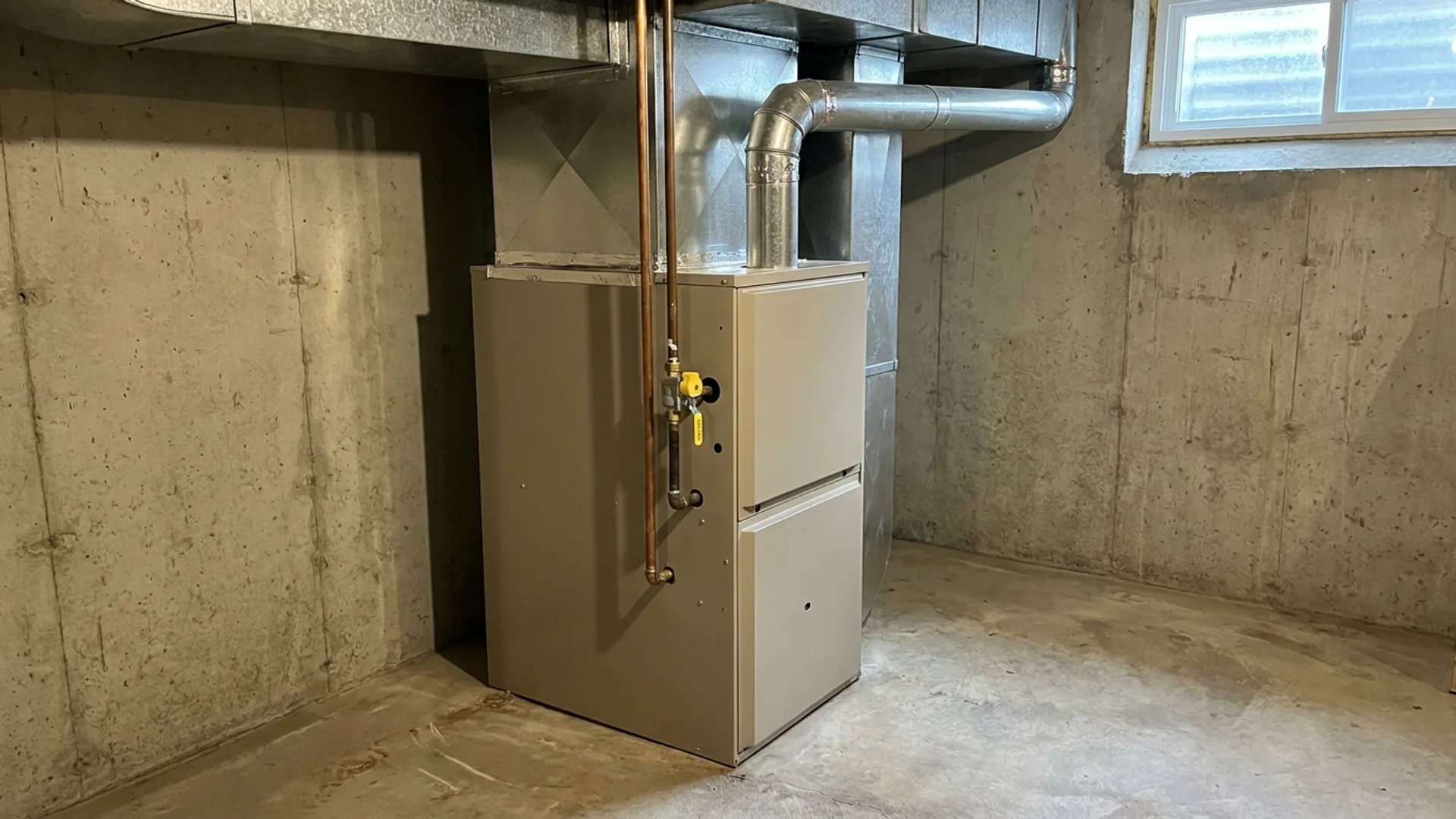
Furnace Installation Denver connects homeowners across Denver and the surrounding metro with one independent, insured local heating professional for a free furnace replacement estimate. If your furnace is failing, loud, or old enough that you're pricing the swap, call (303) 226-1486. No call list, no obligation.
- Free replacement estimate
- Insured local pro
- No obligation
Free Furnace Estimate
A no-cost in-home estimate, with no obligation to buy
Insured Local Heating Professional
We connect you with one independent Denver-area business
Clear Sizing & Price Answers
Understand the options before you decide on a replacement
A furnace rarely dies without warning. It tells you for a season or two first.
Age past 15 to 20 years. That's the design life of most gas furnaces, and while plenty of them keep running well past it, once you're beyond 20 you're on borrowed time and once you're beyond 25 the parts supply gets thin enough that a common failure can leave you waiting days for a component that used to sit on the truck.
Repairs stacking up. Two service calls in one winter is the signal, and the third repair usually costs more than the first two combined while buying you no more life than they did.
Rooms that don't match. Uneven heating with clean filters and open vents often means the furnace can no longer move air the way it was rated to, or it's short-cycling.
A gas bill climbing without a rate change. An 80% furnace degrading toward 70% shows up on the bill before it shows up as a breakdown.
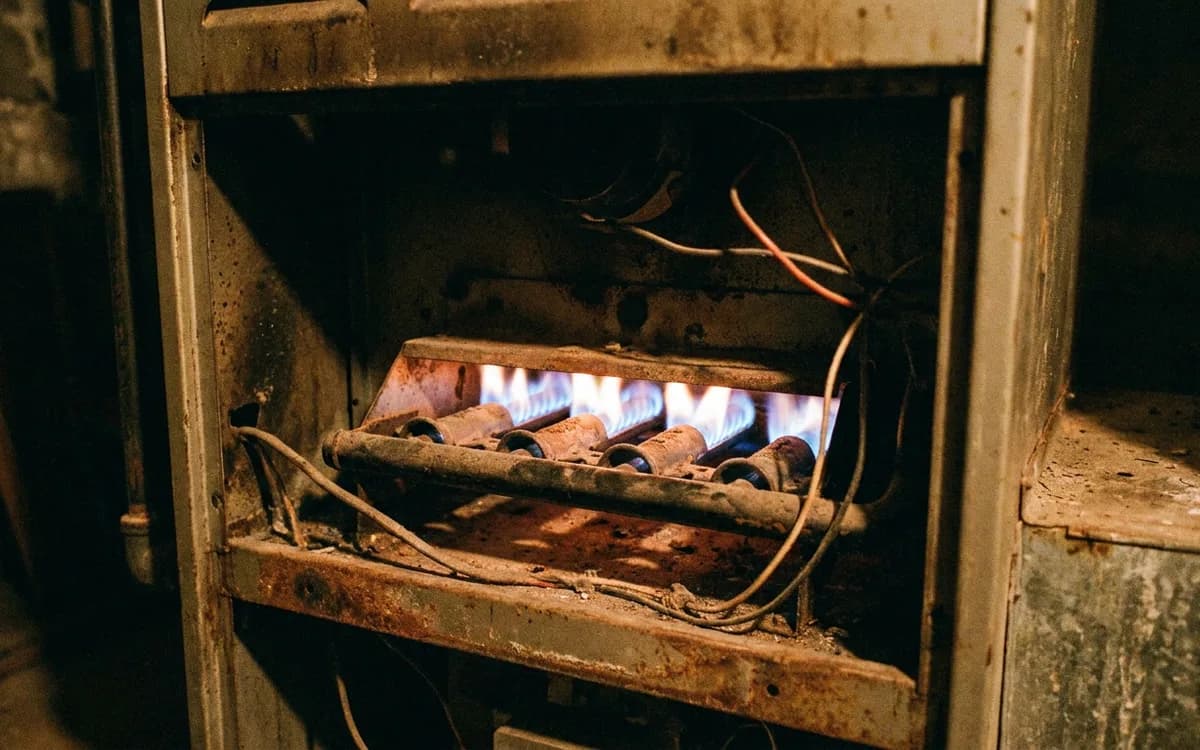
Yellow burner flame instead of blue, or soot around the cabinet. Stop and get it looked at. That's incomplete combustion, and it's the one symptom on this list that's a safety matter rather than a comfort one.
Any cracked heat exchanger finding. This is the replacement conversation at nearly any age. The heat exchanger is the wall between combustion gases and the air you breathe.
What replacement day looks like
Most swaps are one full day. Two technicians usually.
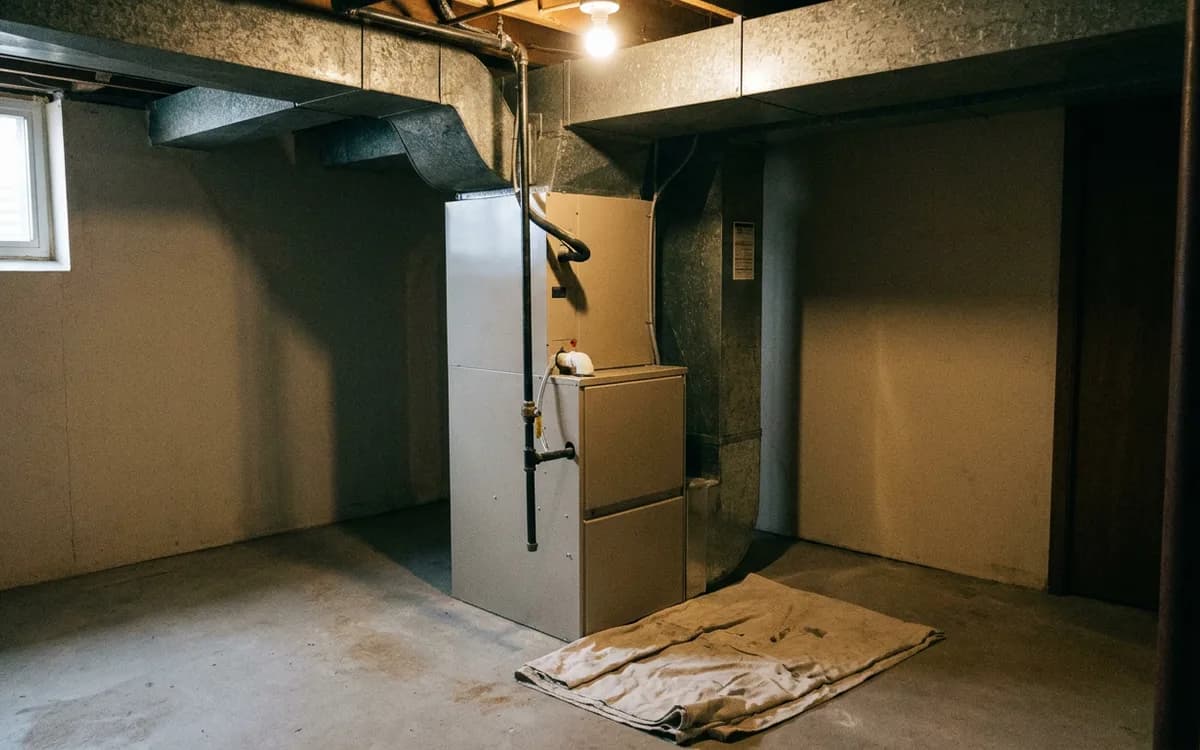
They shut off gas and power, disconnect the old unit from the plenum and gas line, and haul it out. The new furnace then gets set and leveled, connected to the existing ductwork through fabricated sheet metal transitions, and tied into the gas line and the electrical supply — which is where most of the day actually goes, because none of those connections are quite the same shape as the ones that came out. Venting is either reconnected to the existing flue or, on a high-efficiency conversion, run as new PVC to the outside. Then the thermostat is wired, the system is fired, and the technician checks gas pressure and temperature rise before calling it done.
The permit inspection happens afterward, usually within a few days.
Where it runs long: high-efficiency conversions needing new venting, ductwork that has to be reworked, and furnaces in tight attics or crawl spaces where getting the old one out is half the labor.
Matching the furnace to a Denver house
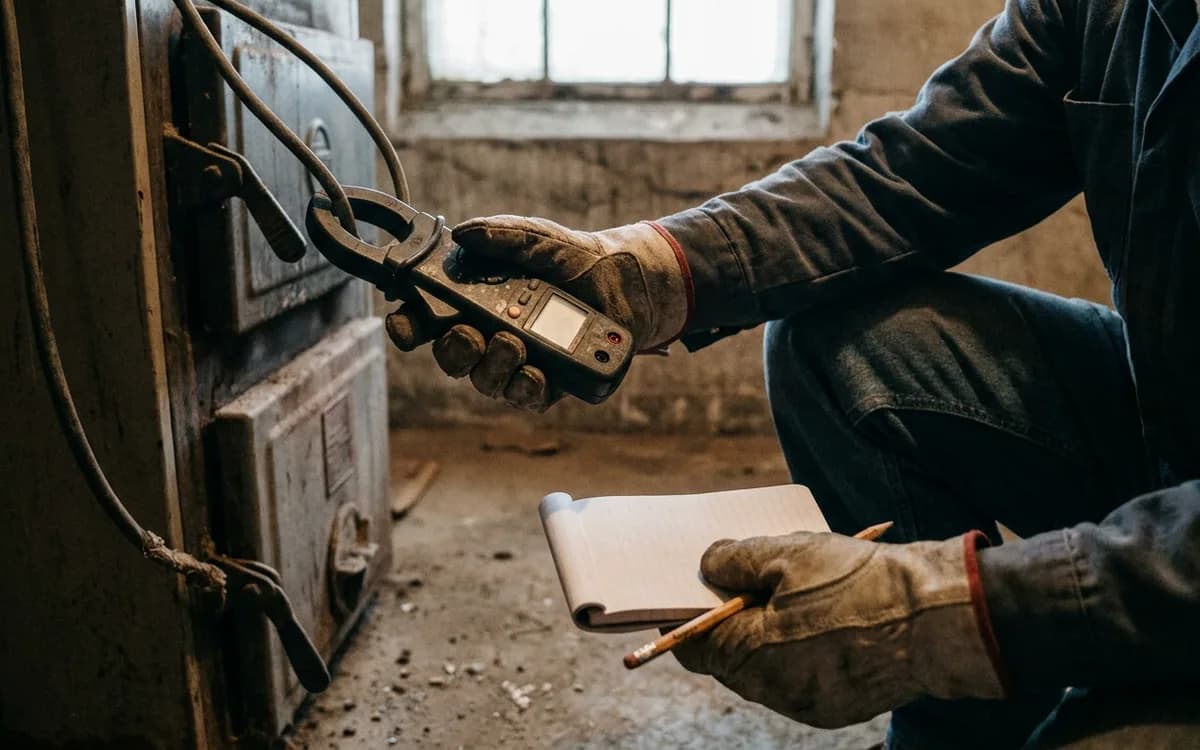
Denver changes the sizing math in a way most of the country doesn't deal with. Gas furnaces lose roughly 4% of rated capacity per 1,000 feet of elevation, and the city sits above 5,200 feet. A furnace specced off sea-level tables shows up undersized. A contractor who works this market derates for altitude without being prompted — it's a fair thing to ask about, and the answer tells you a lot.
The rule of thumb is 30 to 60 BTUs per square foot. On a 2,000 square foot house that's anywhere from 60,000 to 120,000 BTU, which is too wide a range to buy from. A real load calculation accounts for insulation, window area and orientation, ceiling height, and how leaky the envelope is.
Oversizing is the more common error and the more damaging one. A furnace that's too large satisfies the thermostat fast, shuts down, and restarts a few minutes later. That short-cycling produces temperature swings, more wear on the ignitor and blower motor, and a shorter service life on equipment you just paid for.
Denver's older housing stock adds a second issue: ductwork sized for a different era of furnace. Return ducts that were perfectly adequate for a 1970s unit are frequently undersized for the airflow a modern high-efficiency furnace expects, and if the ducts can't carry the air the equipment simply cannot deliver its rated efficiency no matter what the label promises. That's worth catching before you buy, not after.
What a good replacement quote looks like
Four lines, minimum: equipment, labor, materials, permit.
Equipment is 40 to 60% of the total — $2,400 to $3,900 for an 80% AFUE single-stage, $3,550 to $6,100 for a 95%+ two-stage. Labor is 25 to 35%, typically $3,000 to $6,900. Materials are 5 to 15%. The permit is $80 to $150.
Get three quotes and expect them to disagree. The disagreement almost always comes down to three things — the equipment tier being quoted, whether venting work is included or quietly excluded, and whether all three contractors actually sized the furnace the same way — and once you line those up side by side the gap usually explains itself. If one quote is dramatically lower, find out what's missing before assuming you found a deal.
The full cost breakdown has the size and efficiency tables, the items that typically aren't in a quote, and how to read three that don't match.
Efficiency, honestly
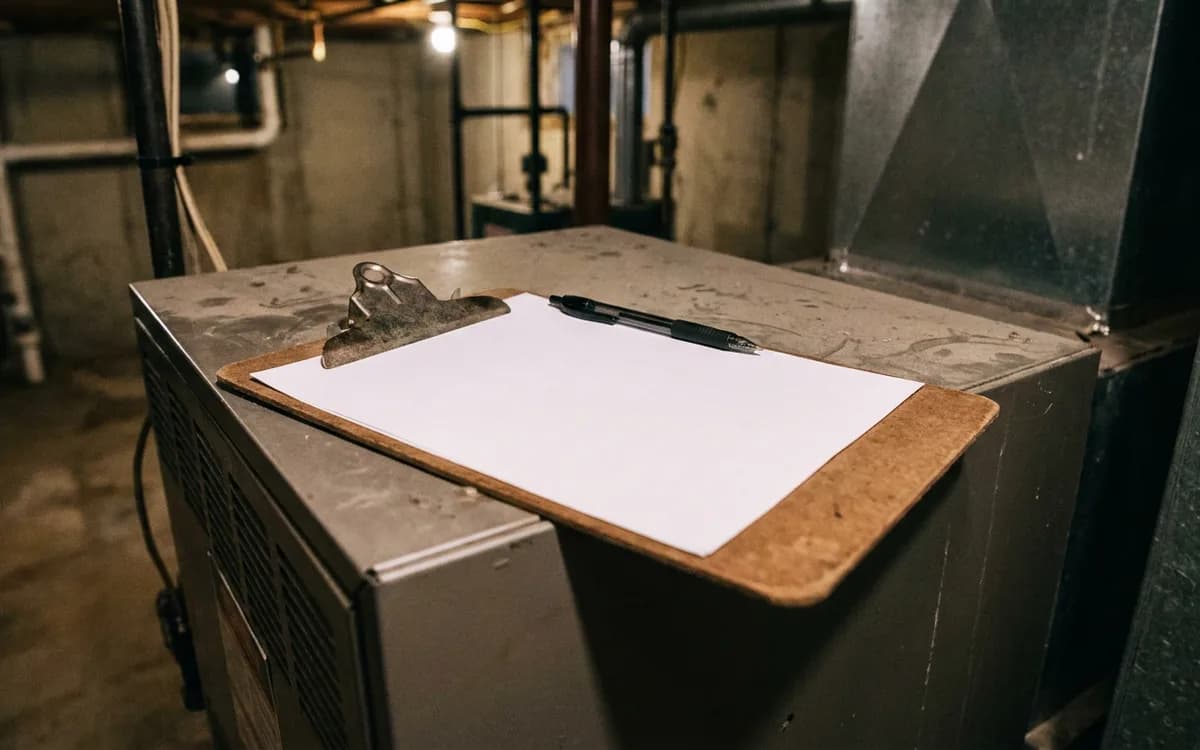
A 95% AFUE condensing furnace burns about 15% less gas than an 80% unit and qualifies for Xcel's $225 rebate — a real, current rebate, despite what a couple of ranking Denver contractor pages claim about furnace rebates ending.
The catch is venting. A condensing furnace exhausts cool, acidic condensate and can't use your existing chimney; it needs PVC run to the outside, which is $899 to $1,965 on a conversion. Over a 15-to-20-year life in Colorado winters the efficiency usually pays that back. Over five years before a planned move, often not.
Colorado now requires new gas furnaces to meet low-NOx limits under HB23-1161, effective January 1, 2026. That's the contractor's obligation, but ask them to confirm the specific model complies in writing. Low-NOx rules and permits covers what changed.
Permits and who is licensed
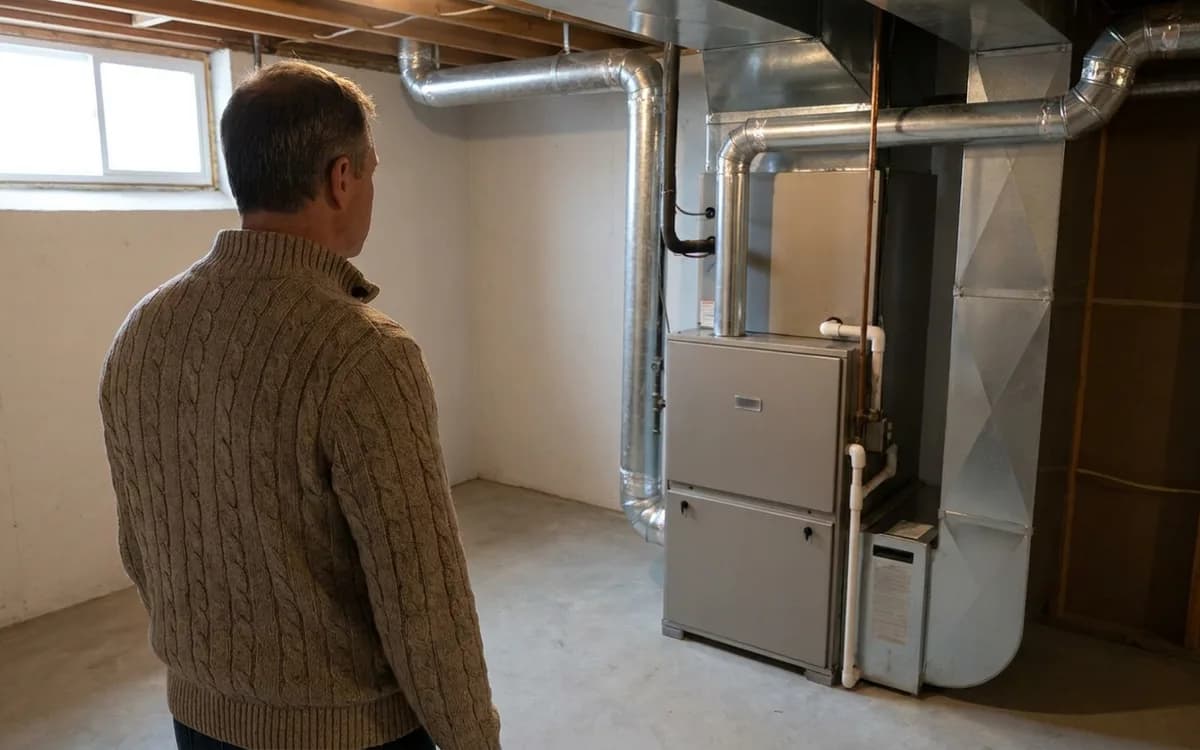
Colorado does not license HVAC contractors at the state level — the state licenses electricians, plumbers, and radon professionals, and heating isn't on that list. Denver licenses mechanical contractors at the city level, and a mechanical permit is required for a replacement.
So the useful questions are specific ones: What's your Denver mechanical contractor license number? Is the permit in the quote, and are you pulling it? Anyone who does this work weekly answers both without pausing, and a contractor who suggests skipping the permit to save you a hundred dollars is quietly telling you how the rest of the job is going to go.

Before you replace, make sure you need to
We'd rather you not buy a furnace you don't need. If yours is under 15 years old and the repair is a few hundred dollars, repair it and spend the money elsewhere.
Furnace repair or replace in Denver works the decision properly, including the age-and-repair-cost arithmetic and the symptoms that override it.
Get a real estimate
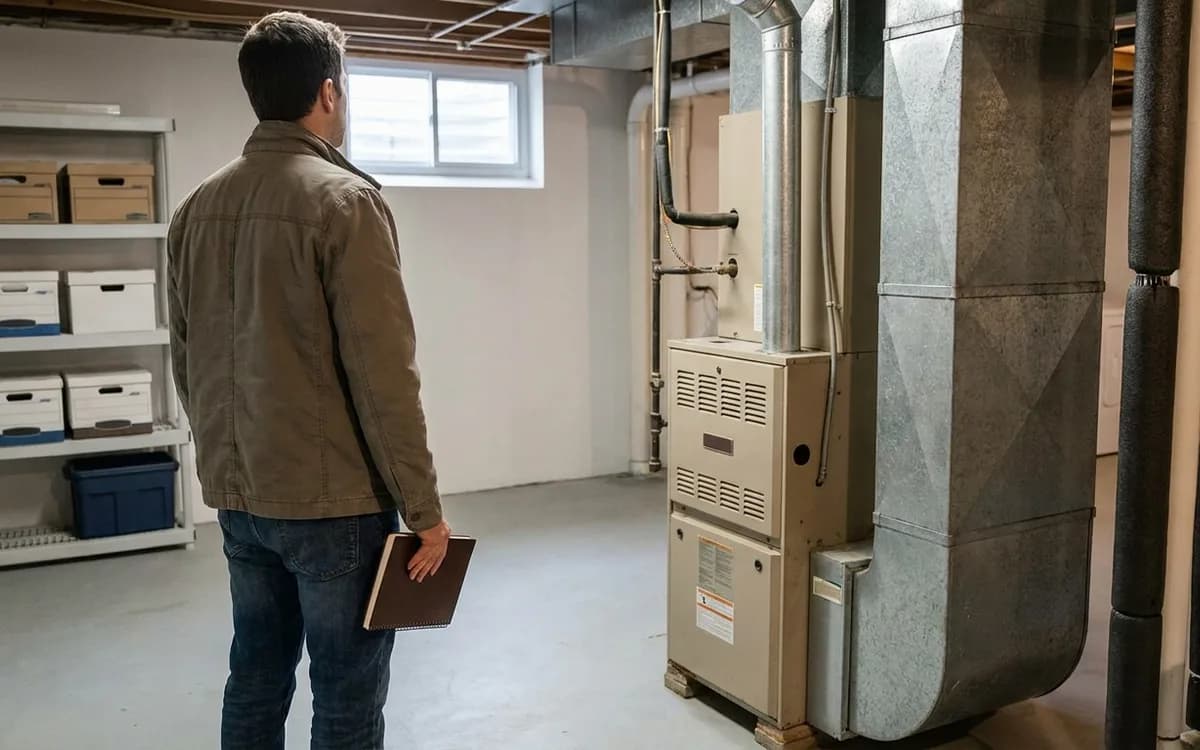
Call (303) 226-1486 or send the form. One insured local heating professional comes out, measures, checks your ductwork and venting, and puts a written estimate in your hands. If the honest answer is that your furnace has another few winters left, that's what you'll hear.
We cover Denver and the metro — Aurora, Broomfield, Thornton, Highlands Ranch, Arvada, Parker, and Littleton. Full list on service areas.
Questions
Frequently Asked Questions
Should a 25 year old furnace be replaced?
Usually, yes — but not automatically. A 25-year-old furnace is past the 15-to-20-year design life of most gas furnaces, parts get harder to source, and it's likely running at 60-80% efficiency against 95%+ available today. That said, if it's heating evenly, hasn't needed repairs, and the heat exchanger checks out on inspection, there's no rule that says it has to go this year. Plan for it rather than panic about it.
How much does furnace replacement cost in Denver?
Most Denver replacements run $6,300 to $8,650 for a standard-efficiency gas furnace with equipment and labor, with roughly $7,400 as a typical middle. High-efficiency 95%+ units run $7,500 to $11,200, plus $899 to $1,965 for PVC venting if you're converting from a standard-efficiency furnace that vented up the chimney.
How long does it take to replace a furnace?
A straightforward swap is one full day. It takes longer when the venting changes — moving to a 95% condensing furnace means running new PVC pipe to the outside — or when ductwork needs modification. Two days is normal for those. If you're without heat, ask about temporary heat while the work is happening.
What is the $5,000 rule for repairing a furnace?
Multiply the repair estimate by the age of the furnace. Over $5,000 means replacement is usually the better spend. A $400 repair on a 20-year-old furnace comes to $8,000, so you'd replace. A $400 repair on a 6-year-old furnace comes to $2,400, so you'd fix it. It's a rule of thumb, not a law — a cracked heat exchanger is a replacement conversation regardless.
Do I need a permit to replace a furnace in Denver?
Yes. A furnace replacement requires a mechanical permit, and your contractor pulls it — expect $80 to $150 as a line on the quote. The permit triggers an inspection, which is the only independent verification that the gas connection and venting were done right. Anyone suggesting you skip it is offering to remove your only safety net.
Can I replace just the furnace and keep my air conditioner?
Usually yes. The furnace blower moves air for the AC too, so the two systems share components, but replacing one without the other is routine when the AC still has life in it. If both are near end of life, doing them together saves on labor and gets you a properly matched system. An honest estimate tells you which situation you're actually in.
What happens to my old furnace?
The contractor removes and disposes of it as part of the job. Removal and haul-away should be included in the quote rather than appearing as a surprise line item — ask if you don't see it. Older units are typically recycled for scrap steel.
Ready to get started?
Get connected with one local, insured heating professional. Honest sizing, a real number, and no obligation to buy.