Denver, CO & the surrounding area
Heat Pump vs Furnace in Denver
Furnace Installation Denver connects Denver homeowners with one insured local heating professional who will price both options honestly. If you're deciding between a gas furnace and a heat pump, call (303) 226-1486. The rebate landscape here is unusual enough that the answer isn't obvious.
- Free replacement estimate
- Insured local pro
- No obligation
Free Furnace Estimate
A no-cost in-home estimate, with no obligation to buy
Insured Local Heating Professional
We connect you with one independent Denver-area business
Clear Sizing & Price Answers
Understand the options before you decide on a replacement
If your gas furnace died and you want the simplest, cheapest replacement, another gas furnace is the straightforward answer — $6,300 to $8,650 installed, one day of work, and a $225 rebate.
If you're also replacing an aging air conditioner, or you plan to stay in the house 10+ years, the heat pump math in Colorado right now is unusually strong — not because the equipment is cheap, but because Xcel is paying an amount that dwarfs anything available on the gas side. And there's a deadline attached, which is the part most comparisons leave out.
What changed the math in Colorado
Here's the gap, stated plainly:
| Gas furnace | Cold-climate heat pump | |
|---|---|---|
| Xcel rebate | $225 total | $2,250 per heating ton (with bonus) |
| On a typical 3-ton system | $225 | roughly $6,750 |
| Equipment + install | $6,300 – $8,650 | Higher, varies by system |
| Also replaces your AC | No | Yes |
That is not a rounding difference. Colorado is deliberately steering homeowners toward heat pumps, and the incentive structure reflects it.
The bonus drops on October 1, 2026. Cold-climate air source goes from $2,250 to $1,500 per heating ton, ground source from $3,300 to $2,200, and heat pump water heaters from $2,250 to $1,500. To keep the current amount the system must be installed and invoiced before October 1, with the rebate application submitted by October 15. Standard non-bonus rebates aren't changing, and neither is the Mountain Energy Project.
Two eligibility details decide whether you see the big number. The bonus requires you to be an Xcel natural gas customer with a gas furnace or boiler as your primary heat source, and since November 16, 2025, homes already running electric systems receive standard rebates only.
There's an irony worth naming: the homeowners who qualify for the largest heat pump bonus are precisely the ones who currently heat with gas.

Cold-climate performance, honestly
The old objection was that heat pumps quit when it gets genuinely cold. That was true of older equipment and it is no longer true of cold-climate models — but "no longer true" isn't the same as "irrelevant," and you should know where the line actually falls.
Xcel's ccASHP standard requires a coefficient of performance of at least 1.75 at 5°F along with at least 70% of rated capacity at that same temperature. In plain terms, at five degrees the unit still delivers substantially more heat energy than the electricity it draws, and it still produces most of its rated output. That's a real engineering bar, and modern cold-climate equipment clears it.
Denver's winter design temperature sits around and below that mark on the coldest mornings, which is why most sensible installations here don't ask the heat pump to carry January by itself.
Dual fuel is usually the Denver answer
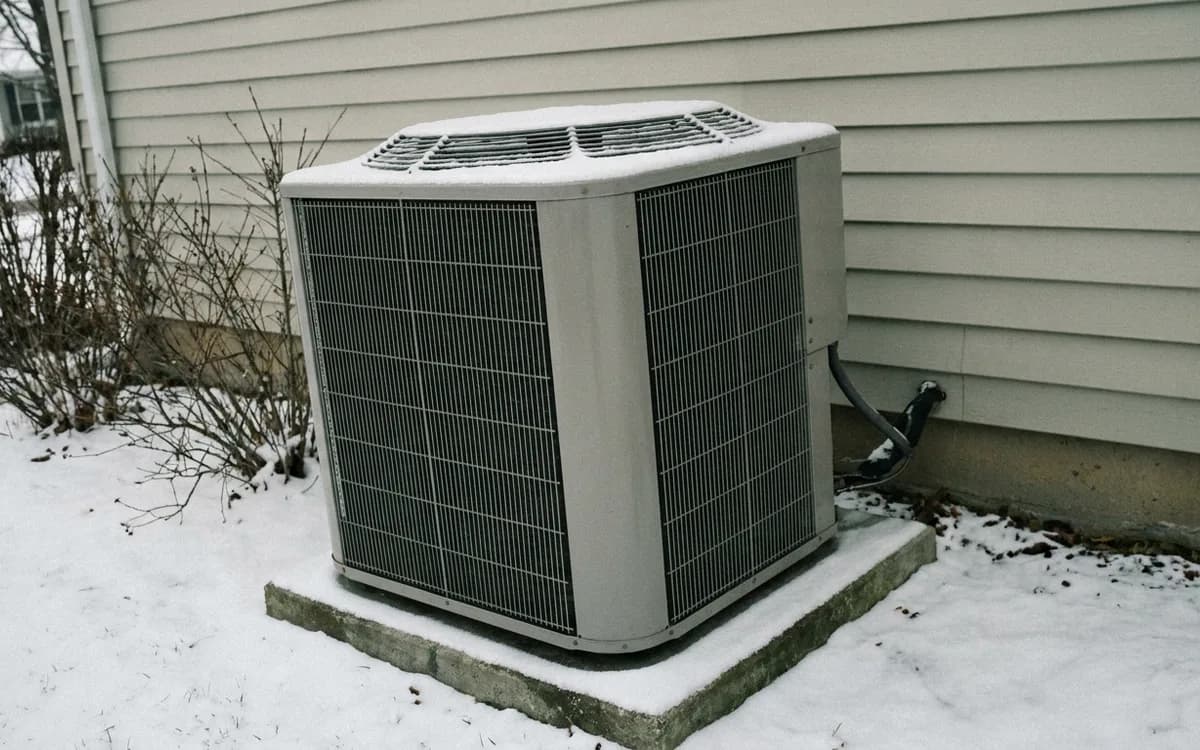
Keep the gas furnace. Add the heat pump. The system runs the heat pump while it's efficient and switches over to gas when the temperature drops past the crossover point.
You get the heat pump rebate, the summer air conditioning, and most of the shoulder-season efficiency without gambling your subzero week on electric heat. For a Denver house that already has ductwork and a working gas line, this is frequently the sensible middle rather than a compromise.
Where the crossover point gets set
Dual fuel lives or dies on one setting, and almost nobody asks about it. The crossover temperature is the outdoor reading where the controls stop running the heat pump and hand the house over to the gas furnace.
Set it too high and you've bought an expensive heat pump that spends the winter idle while the furnace does the work you paid to avoid. Set it too low and the heat pump grinds away in weather where gas would have been cheaper and more comfortable, which is how people end up convinced heat pumps don't work here.
The honest answer is that the right number depends on what you pay for gas against what you pay for electricity, and those rates move. Ask two questions at the estimate: what crossover temperature are you programming, and how do I change it later? A contractor who has actually commissioned dual-fuel systems will have a considered answer. One who hasn't will tell you it's set at the factory.
Sizing a heat pump isn't sizing a furnace
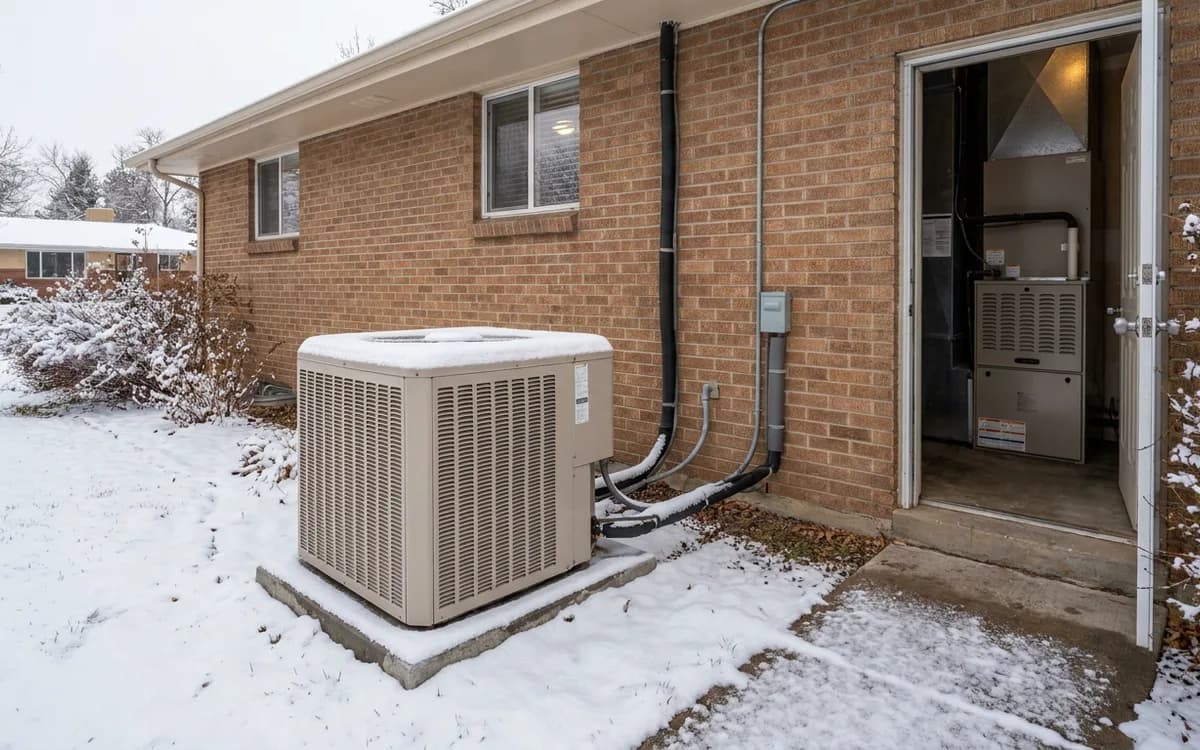
A gas furnace gets sized for the coldest morning of the year and then throttles down the rest of the season. A heat pump has to satisfy two loads at once — heating in January and cooling in July — and those two numbers rarely land in the same place on a Denver house.
Size it to the heating load and you'll likely have an oversized air conditioner that short-cycles all summer and never pulls humidity properly. Size it to the cooling load and you accept that backup heat carries more of the coldest weeks. Neither is wrong. Which compromise suits your house is exactly the conversation a load calculation exists to have.
Altitude enters here too, though differently than it does with gas. A furnace loses combustion capacity at elevation. A heat pump has no combustion to lose — what thins out is the air itself, which changes heat transfer across the coil and the airflow the blower has to move. It's a correction a competent installer applies, and a detail worth hearing them mention unprompted.
What your house decides for you
Some of this isn't a matter of preference.
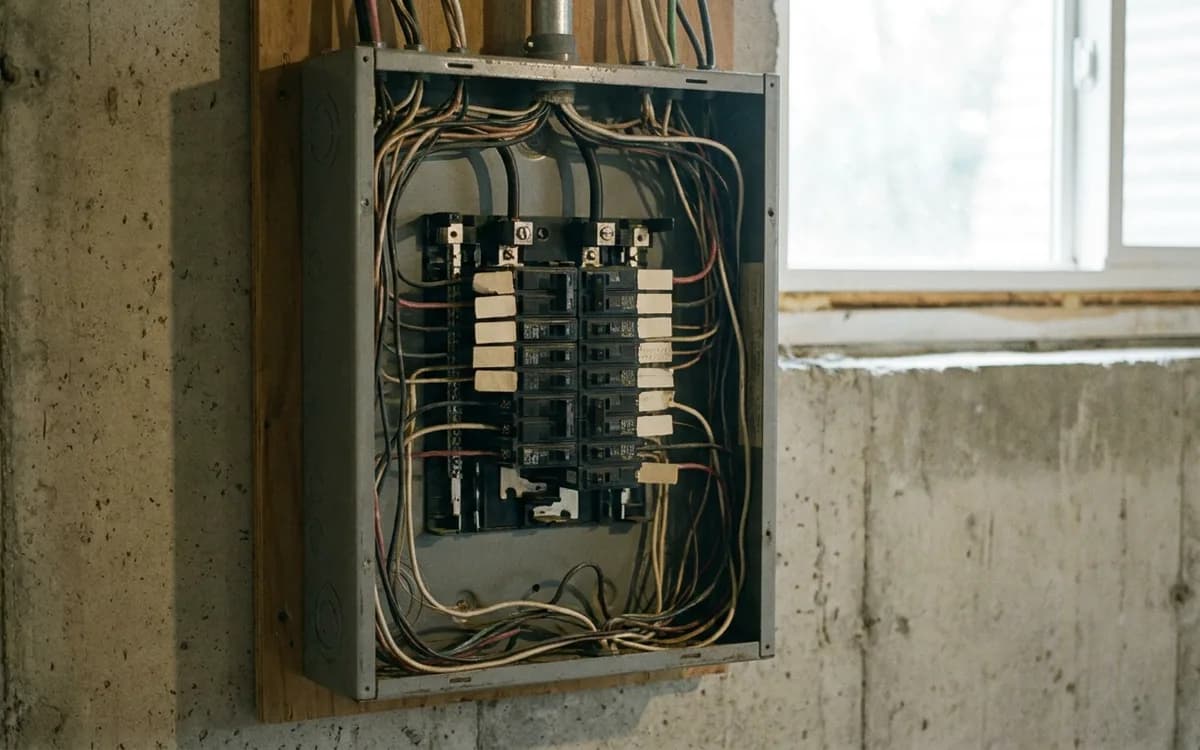
Electrical panel capacity. A heat pump needs dedicated circuit capacity, and if the panel is full that's $3,750 to $7,100 — enough to erase the rebate advantage entirely. Ask for it to be checked during the estimate.
Ductwork. A heat pump moves a larger volume of cooler air than a gas furnace does. Ducts sized for a 1970s furnace, common in a city whose median home dates to 1975, may need rework at $1,600 to $5,550 and up.
Your gas service. No Xcel gas service means no bonus rebate, which changes the comparison substantially.
How long you're staying. Heat pump economics reward time. Under five years to a planned move, a gas furnace is usually the rational purchase.
When a gas furnace is simply the right call
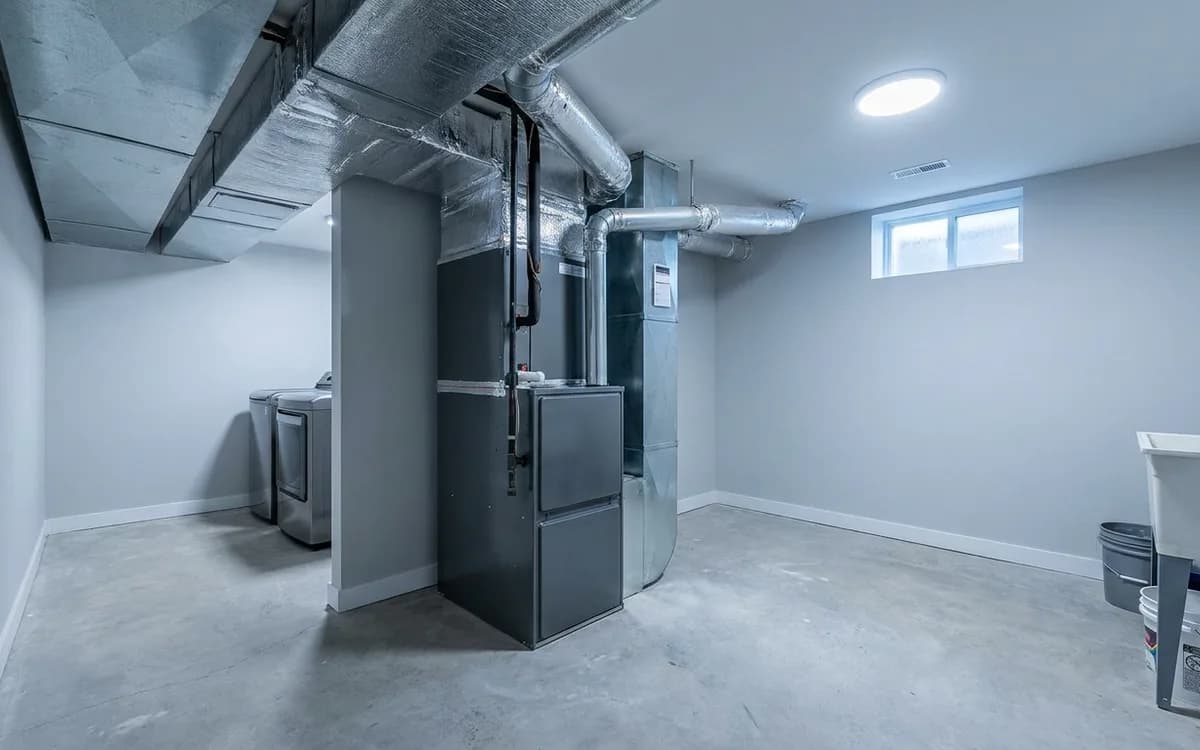
Nobody should be talked into equipment that doesn't suit the house. Choose the furnace when your AC is newer and doesn't need replacing, when the panel would need an expensive upgrade, when you're selling within a few years, or when the furnace quit in January and you need heat this week rather than a project.
A 95% AFUE gas furnace is a good machine. It burns roughly 15% less gas than an 80% unit, it qualifies for the $225 rebate, and it will run for 15 to 20 years.
One correction while we're here: a couple of Denver contractor pages currently claim furnace rebates ended in 2026 and only heat pumps qualify. That's wrong — Xcel's own rebate page lists $225 for a 95% AFUE gas furnace today. The heat pump bonus is what's being reduced. Different program, different equipment.
Get both options priced
The only way to settle this is with real numbers for your house — your panel, your ductwork, your gas service, your timeline.
Call (303) 226-1486 or send the form. One insured local heating professional will price the options honestly, including telling you when the simpler answer is the better one.
For the gas-side detail: furnace installation cost in Denver, high-efficiency furnaces in Denver, and the full Xcel rebate picture.
Questions
Frequently Asked Questions
Do heat pumps work in Denver winters?
Cold-climate heat pumps do. Xcel's own program requires a ccASHP to hold a COP of at least 1.75 at 5°F and at least 70% of its rated capacity at that temperature, which is a real engineering bar. Denver's design temperature sits near or below that, so most installations here pair the heat pump with a backup heat source for the coldest stretches rather than running it alone.
Is a heat pump cheaper than a furnace in Denver?
Not on equipment, but the rebates change everything. A gas furnace runs $6,300 to $8,650 installed with a $225 Xcel rebate. A cold-climate heat pump costs more upfront, but Xcel pays $2,250 per heating ton with the bonus — on a 3-ton system that's around $6,750 back. The rebate gap is roughly 30 times larger, and it's the single biggest factor in the comparison.
Is the Xcel heat pump rebate being reduced?
Yes. The bonus drops from three times the standard rebate to two times on October 1, 2026. Cold-climate air source heat pumps go from $2,250 to $1,500 per heating ton, ground source from $3,300 to $2,200. To keep the current amount, the system has to be installed and invoiced before October 1 and the application submitted by October 15. The standard rebates are not changing.
Can I keep my gas furnace and add a heat pump?
Yes, and in Denver that's often the practical answer. A dual-fuel setup runs the heat pump when it's efficient and switches to the gas furnace when temperatures drop below the crossover point. You get most of the rebate and most of the efficiency without betting your January on electric heat alone.
Do I qualify for the bigger Xcel heat pump bonus?
The bonus requires being an Xcel natural gas customer using a gas furnace or boiler as your primary heat source. Homes on electric resistance heat — baseboard, for example — or without Xcel gas service get the standard rebate instead. As of November 16, 2025, customers with existing electric systems are no longer eligible for the bonus at all, though standard rebates still apply.
Does a heat pump replace my air conditioner too?
Yes. A heat pump is an air conditioner that can run in reverse, so it cools in summer and heats in winter with the same outdoor unit. If your AC is also near end of life, that consolidation is a genuine part of the value — you're replacing two machines with one.
What if my electrical panel can't handle a heat pump?
It's the most common hidden cost. A panel upgrade runs $3,750 to $7,100, and it can turn an attractive rebate into a wash. Ask the contractor to check panel capacity during the estimate rather than after — this is exactly the sort of thing that should surface before you sign, not on installation day.
Ready to get started?
Get connected with one local, insured heating professional. Honest sizing, a real number, and no obligation to buy.