Denver, CO & the surrounding area
High Efficiency Furnace Denver
Furnace Installation Denver connects Denver-area homeowners with one insured local heating professional who will price a high efficiency furnace in Denver honestly. Call (303) 226-1486 for a free estimate. High efficiency is often the right choice here — but not always, and a good contractor tells you which.
- Free replacement estimate
- Insured local pro
- No obligation
Free Furnace Estimate
A no-cost in-home estimate, with no obligation to buy
Insured Local Heating Professional
We connect you with one independent Denver-area business
Clear Sizing & Price Answers
Understand the options before you decide on a replacement
AFUE — Annual Fuel Utilization Efficiency — is the share of your gas that becomes heat in the house across a season.
A 95% AFUE furnace turns 95 cents of every gas dollar into heat and loses roughly 5 up the flue. An 80% AFUE unit, which is what most pre-1990 Denver homes were built with, loses about 20 cents. That 15-point spread is the whole argument, and in a climate with Denver's heating season it's a real number rather than a marketing one.
Where AFUE gets oversold is at the top. The gap between 95% and 96% is about a penny on the dollar — meaningless against a project costing several thousand. Sizing accuracy and duct condition swamp it. Buy the tier, not the decimal.
The venting cost nobody mentions upfront
This is the part that surprises people, so here it is plainly.
A high-efficiency furnace is a condensing furnace. It pulls so much heat out of the combustion gases that the exhaust leaves cool instead of hot, and slightly acidic. That exhaust cannot go up a masonry chimney — it would condense inside and eat the flue.
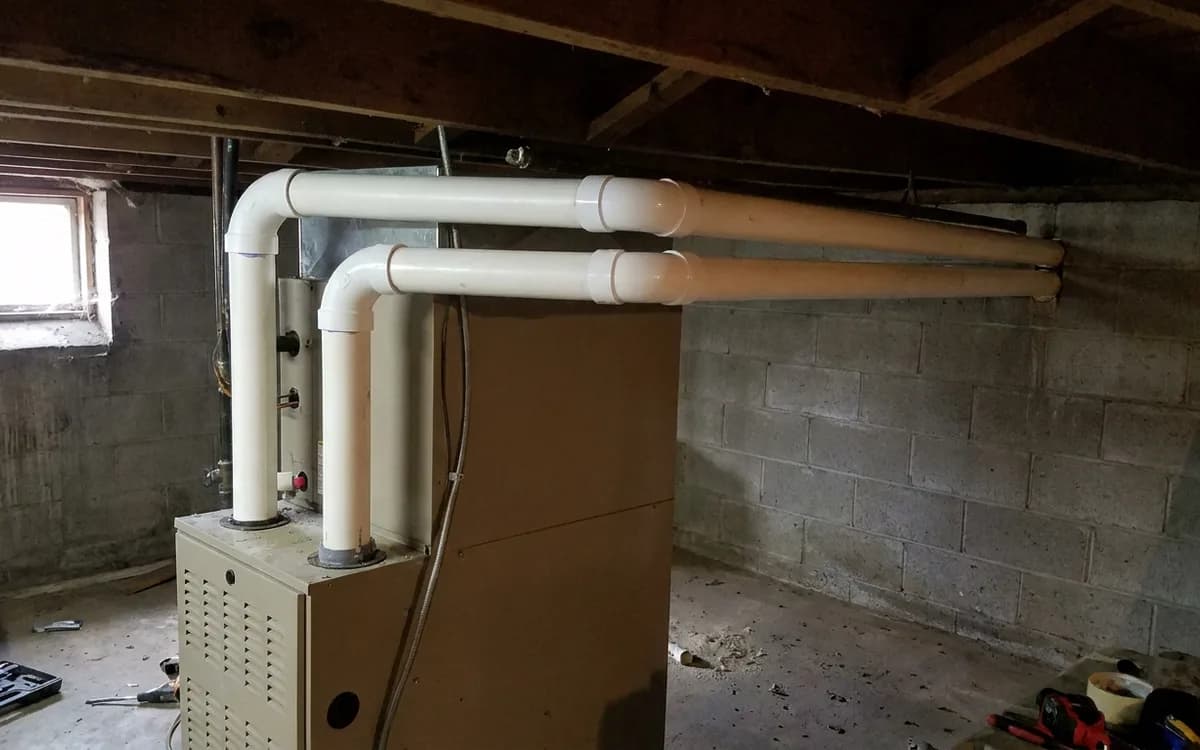
So a condensing furnace needs PVC pipe run to an exterior wall, plus a condensate drain. On a home currently venting up a chimney, that conversion costs $899 to $1,965 on top of the equipment.
The honest comparison, then:
| Standard 80% AFUE | High-efficiency 95%+ | |
|---|---|---|
| Installed | $6,650 – $8,600 | $7,500 – $11,200 |
| Venting conversion | none | + $899 – $1,965 |
| Xcel rebate | none | – $225 |
| Gas use for heating | baseline | roughly 15% less |
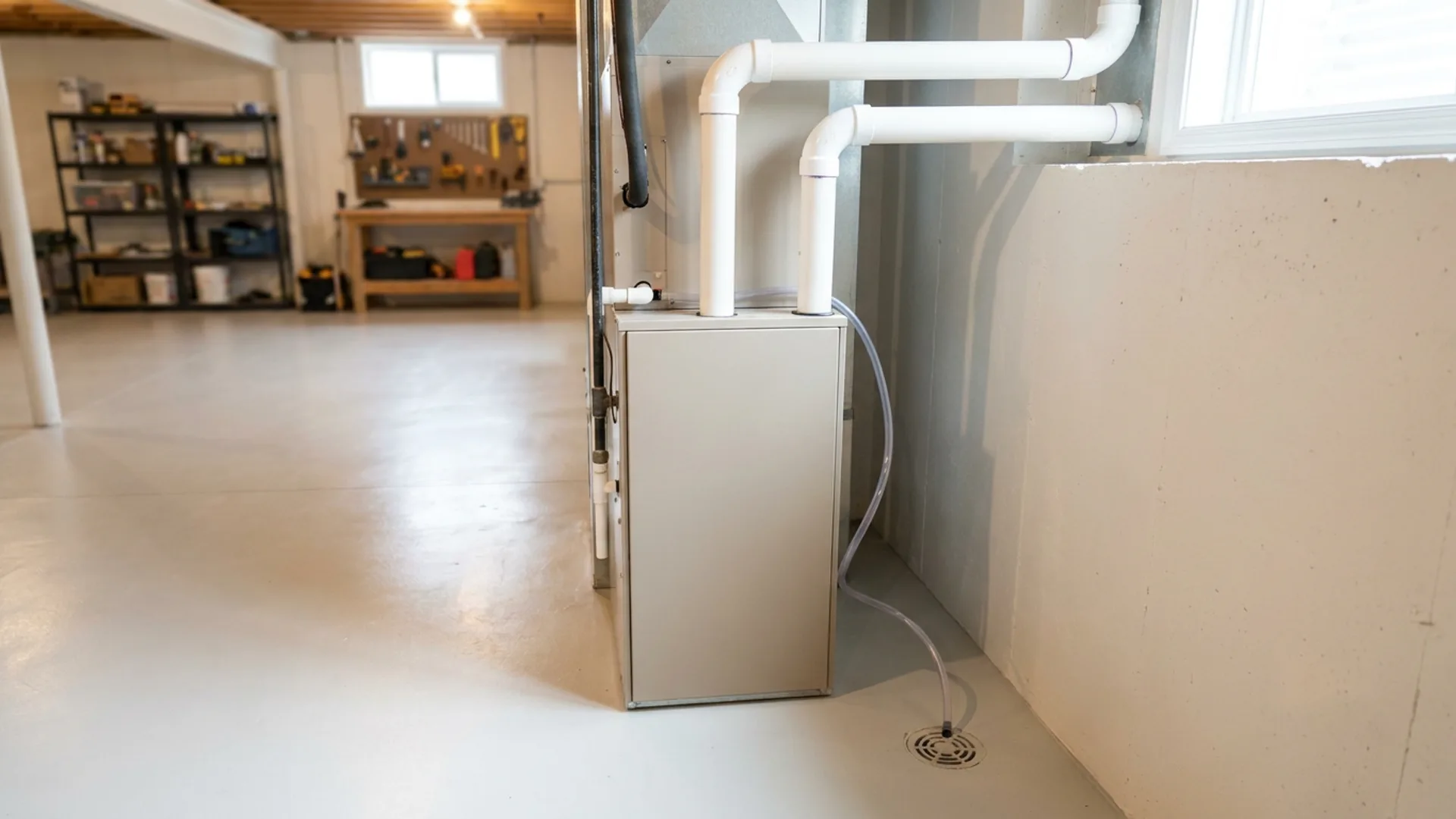
If your home already has PVC venting — common in Denver-area homes built from the 2000s onward — the conversion cost disappears entirely and high efficiency becomes a much easier decision. Check before assuming: white PVC to an exterior wall means you're already there; a metal flue means you're converting.
Single-stage, two-stage, and modulating
Separate from AFUE, and frequently confused with it.
Single-stage runs at full blast or off. It's the least expensive and the least comfortable — you get temperature swings as it cycles.
Two-stage runs at reduced output most of the time and steps up on the coldest days. Fewer swings, less cycling, quieter operation, and less wear because the equipment spends most of its life working gently.
Modulating adjusts continuously across a range. The most comfortable and the most expensive, and the returns diminish for most houses.
Staging governs comfort and equipment longevity. AFUE governs the gas bill. Two different questions, and a contractor should quote them as such.
What Denver's altitude does to this
Gas furnaces lose roughly 4% of rated capacity per 1,000 feet of elevation, and Denver sits above 5,200 feet. That derate applies to standard and high-efficiency equipment alike, but it matters more when you're paying a premium — an oversized high-efficiency furnace that short-cycles wastes the efficiency you paid extra for.
Colorado also now requires new gas furnaces to meet low-NOx limits under HB23-1161, effective January 1, 2026. That's a compliance obligation on the contractor rather than a choice you make, but ask them to confirm the specific model complies in writing. Low-NOx rules and permits covers what changed.
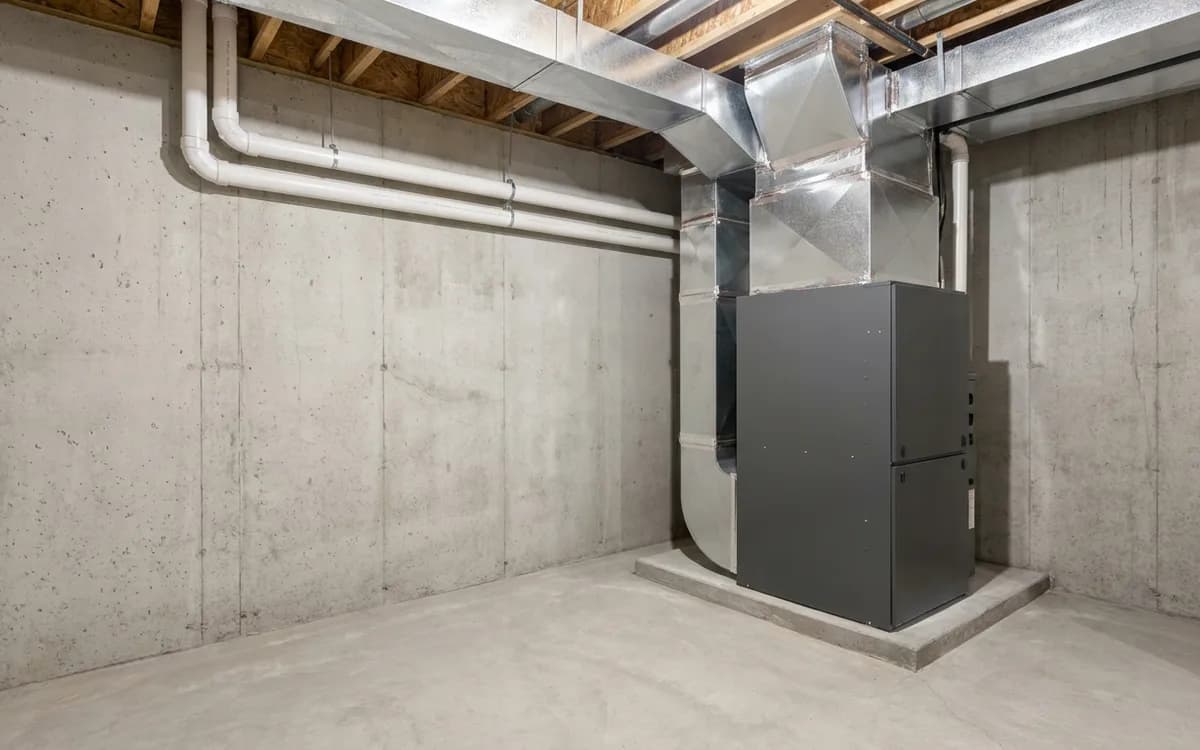
The condensate line nobody warns you about
A condensing furnace makes water. That's not a defect — it's the whole mechanism. Pulling enough heat out of the exhaust to hit 95% means the water vapor in those combustion gases turns liquid, and it has to go somewhere.
Three things follow, and they're the ones that generate callbacks.
It needs a drain. If your furnace sits near a floor drain, this is trivial. If it doesn't, you need a small condensate pump to lift the water to one — a modest part with its own failure mode, since a dead pump shuts the furnace down on a safety switch.
The water is mildly acidic. Some jurisdictions and some plumbing situations want a neutralizer cartridge before it enters the drain. Ask whether yours does.
It can freeze. This is the Denver-specific part. Condensate line routed through an unheated crawl space, a garage, or too close to an exterior wall will ice up in a January cold snap, back up, and trip the furnace off — on the coldest night, which is the only night you'd notice. Routing it through conditioned space, or heat-taping the run that can't be, is a five-minute decision at installation and an emergency service call if it's skipped.
None of this argues against high efficiency. It argues for asking where the drain goes.
Working out your own payback
You don't need the contractor's spreadsheet. You need last winter's gas bills.
Add up the gas you burned across the heating season, then subtract the summer baseline months — that leftover is roughly what heating cost you. A 95% furnace burns about 15% less gas than an 80% unit, so 15% of that heating figure is your rough annual saving.
Now put it against what the upgrade actually costs you. The high-efficiency equipment premium, plus $899 to $1,965 for PVC venting if you're converting from a chimney, minus the $225 Xcel rebate. Divide the net by the annual saving and you have your payback in years.
Two honest caveats. Gas prices move, so the number is an estimate rather than a promise. And if your home already vents through PVC, the venting line drops out entirely and the payback usually shortens dramatically.
Run it yourself before the estimate. Walking into that conversation knowing your own heating spend changes the quality of the conversation considerably.
When standard efficiency is the better buy
Nobody should be talked into equipment that doesn't fit the situation. Standard efficiency is the sensible choice when:
- You're selling within a few years. The payback needs time you won't be there for.
- The venting conversion is difficult. Some older homes have limited exterior wall access, and a hard PVC routing pushes the cost past the benefit.
- Your ductwork is undersized. If the returns can't carry the airflow, a high-efficiency furnace can't reach its rated performance. Fix the ducts first or buy the tier the ducts can support.
- The furnace failed in January and you need heat now. A straightforward same-day-vent swap gets your house warm. That's a legitimate reason.
An 80% furnace is not a bad machine. It's a machine matched to a different set of circumstances.
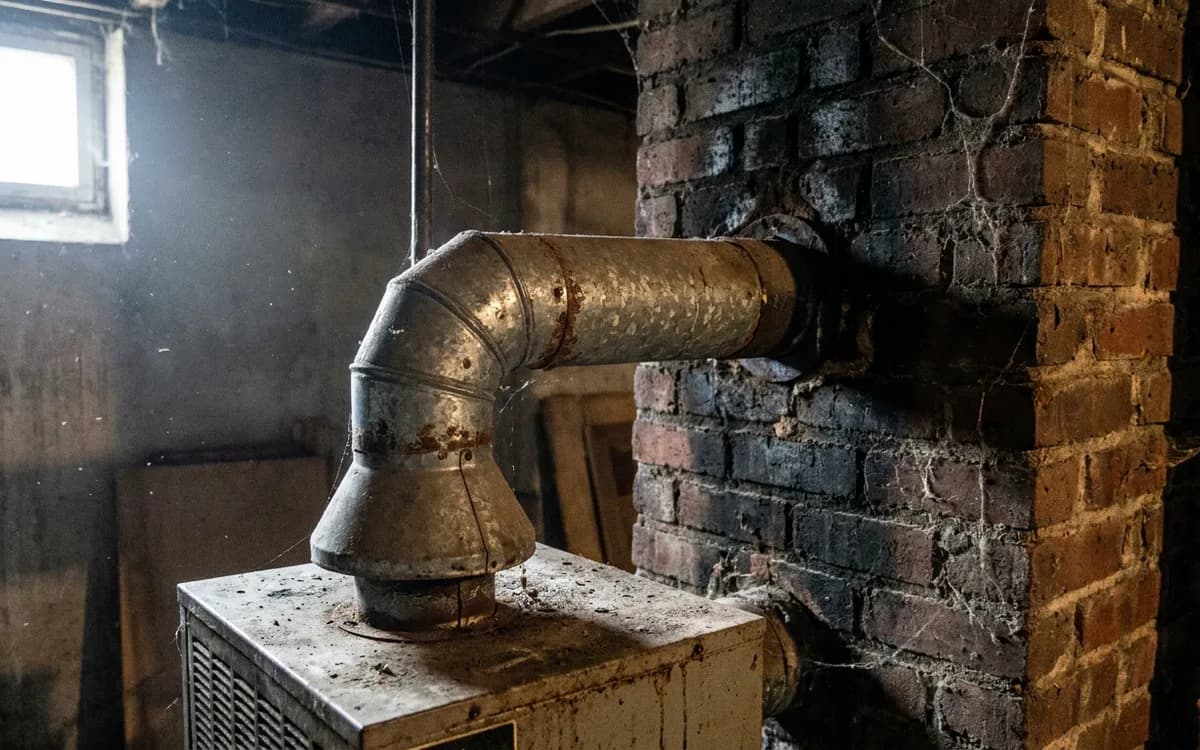
Get both tiers quoted
Ask for the standard and high-efficiency options priced side by side, with venting broken out as its own line, and the model's AFUE stated in writing. Then the decision is yours to make with real numbers instead of a recommendation.
Call (303) 226-1486 or send the form. One insured local heating professional will quote both honestly.
More detail: furnace installation cost in Denver, the Xcel rebate picture, and if you're considering a bigger change, heat pump vs furnace.
Questions
Frequently Asked Questions
Is a high-efficiency furnace worth it in Denver?
If you're staying ten years or more, usually yes. A 95% AFUE furnace burns roughly 15% less gas than an 80% unit and earns Xcel's $225 rebate. The catch is that converting from a chimney-vented furnace adds $899 to $1,965 for new PVC venting. Over a 15-to-20-year life in Colorado winters that pays back; over three years before a move, it doesn't.
What does 95% AFUE mean?
AFUE is Annual Fuel Utilization Efficiency — the portion of your gas that becomes usable heat over a heating season. A 95% AFUE furnace converts 95 cents of every gas dollar into heat and loses about 5 cents up the flue. An older 80% unit loses around 20 cents. That 15-point gap is the entire efficiency argument.
Why does a high-efficiency furnace need different venting?
Because it extracts so much heat from the combustion gases that the exhaust comes out cool and acidic rather than hot. That exhaust would condense and corrode a masonry chimney, so a condensing furnace vents through PVC pipe run directly to an exterior wall, and it also produces condensate that needs a drain. It's why the conversion costs more than the equipment difference alone.
What is the difference between single-stage and two-stage?
A single-stage furnace runs at full output or not at all. A two-stage runs at a lower output most of the time and steps up only when needed, which produces steadier temperatures and less on-off cycling. Modulating furnaces adjust across a continuous range and are the most comfortable and most expensive. Staging affects comfort and wear; AFUE affects the gas bill.
Does a 96% furnace beat a 95% furnace?
Barely. The difference between 95% and 96% AFUE is about one cent per gas dollar, which is negligible against the several thousand dollars you're spending. Sizing accuracy, installation quality, and ductwork condition all affect real-world performance far more than a single AFUE point. Don't pay a meaningful premium for it.
Do high-efficiency furnaces qualify for the Xcel rebate?
A natural gas furnace at 95% AFUE qualifies for a $225 Xcel rebate. Below that threshold there's no furnace rebate. Get the specific model number and AFUE rating in writing on the quote before installation — 94.5% doesn't qualify, and that's the sort of detail that only surfaces at claim time.
Will a high-efficiency furnace work with my old ductwork?
Not always at full performance. High-efficiency furnaces expect a certain airflow, and return ducts sized for a 1970s furnace are frequently too small. When that happens the equipment can't deliver its rated efficiency no matter what the label says. In Denver, where the median home dates to 1975, this is worth checking before choosing the efficiency tier.
Ready to get started?
Get connected with one local, insured heating professional. Honest sizing, a real number, and no obligation to buy.